Key takeaways
- NAD+ (nicotinamide adenine dinucleotide) is a coenzyme present in every living cell, shuttling electrons in metabolism and serving as a substrate for sirtuins, PARPs and CD38.
- Tissue NAD+ levels decline with age in humans and animals, driven more by increased consumption than by reduced synthesis.
- In mice, restoring NAD+ with precursors improved several markers of metabolic and physical aging; in humans, oral precursors reliably raise blood NAD+ but functional outcomes are mixed.
- Direct NAD+ administration has been studied in only a handful of small human pharmacokinetic studies, and research-grade NAD+ is not an approved drug.
Few molecules appear in as many biochemistry lectures as NAD+. It carries electrons from the breakdown of glucose and fat to the mitochondrial respiratory chain, which is the textbook reason cells cannot live without it. Over the past two decades a second role has come into focus: NAD+ is consumed, not merely recycled, by a set of signaling enzymes that regulate gene expression, DNA repair and inflammation. Because those enzymes deplete NAD+ and because tissue levels fall with age, the molecule has become one of the central objects of aging research. This note explains what NAD+ is, how cells make and use it, what the animal and human literature actually shows, and where the direct molecule fits alongside its better-studied precursors.
The molecule and its two jobs
Nicotinamide adenine dinucleotide is a dinucleotide: two nucleotides joined through their phosphate groups, one carrying adenine and the other nicotinamide, a form of vitamin B3. The nicotinamide ring is the working part. It can accept a hydride ion to become NADH and give it back to become NAD+ again, which makes the pair a reusable electron carrier.1
In its first job, NAD+ is a redox coenzyme. Glycolysis, the citric acid cycle and fatty-acid oxidation each hand electrons to NAD+, producing NADH, which delivers them to complex I of the electron transport chain. The energy released along the chain drives ATP synthesis. In this role NAD+ is not used up; the same molecules cycle between oxidized and reduced states thousands of times.
In its second job, NAD+ is a substrate that gets destroyed. Three enzyme families cleave it at the glycosidic bond, releasing nicotinamide and using the remaining ADP-ribose moiety for signaling. Sirtuins (SIRT1–7) couple NAD+ cleavage to removal of acetyl groups from proteins, including histones and metabolic enzymes, which links the cell’s energy state to gene regulation. Poly(ADP-ribose) polymerases (PARPs) consume NAD+ to build ADP-ribose chains at sites of DNA damage. CD38 and related glycohydrolases hydrolyze NAD+ to produce calcium-signaling messengers.1 Each reaction lowers the NAD+ pool, so the cell must continuously resynthesize it.
How cells make NAD+
Mammalian cells use three routes. The de novo pathway builds NAD+ from the amino acid tryptophan through eight enzymatic steps; it is quantitatively minor in most tissues. The Preiss–Handler pathway starts from nicotinic acid (niacin). The salvage pathway, which supplies the bulk of NAD+ in most cells, recaptures the nicotinamide released by sirtuins, PARPs and CD38 and converts it back through nicotinamide mononucleotide (NMN) to NAD+. The rate-limiting enzyme of salvage is NAMPT, and the final step is catalyzed by NMNAT enzymes located in the nucleus, cytoplasm and mitochondria.1,5
Isotope-tracing work by Liu and colleagues quantified these fluxes in mice. Across tissues, NAD+ turned over with half-lives ranging from about 15 minutes in the small intestine to roughly 15 hours in skeletal muscle, and salvage from nicotinamide dominated synthesis. Notably, orally administered NR and NMN were largely converted to nicotinamide in the gut and liver before reaching other tissues, entering the NAD+ pool through the same salvage route as dietary vitamin B3.4 This finding shapes how the precursor literature should be read; we cover it in NMN vs. NR vs. NAD+.
Why NAD+ declines with age
Measurements in human tissue show a fall in NAD+ across adult life. In post-mortem human skin samples spanning newborns to octogenarians, Massudi and colleagues reported that NAD+ content declined with age while markers of oxidative damage and PARP activity rose, with a stronger effect in men.2 Similar patterns have been reported in rodent liver, muscle and brain.
The decline appears to be driven mostly by consumption rather than by failing synthesis. Camacho-Pereira and colleagues showed that CD38 expression and activity increase with age in mouse tissues, that CD38-knockout mice are protected from age-related NAD+ decline, and that the protective effect depends on the mitochondrial sirtuin SIRT3.3 Chronic DNA damage and inflammation raise PARP and CD38 activity, and the immune cells that accumulate in aged tissue are rich in CD38. Together these findings frame aging as a state of increased NAD+ demand that eventually outstrips salvage capacity.1
The aged cell is not short of the machinery to make NAD+; it is spending the molecule faster than it can recycle it.
What raising NAD+ did in animals
Because NAD+ decline is measurable, researchers asked whether reversing it changes aging phenotypes. Most such studies used precursors rather than NAD+ itself, since the precursors are orally available and cross membranes more readily. In the most-cited long-term study, Mills and colleagues gave mice NMN in drinking water for 12 months. Treated animals showed less age-associated weight gain, better insulin sensitivity, improved physical activity and better retinal and bone-density readouts, without evidence of toxicity.6 Other groups reported gains in mitochondrial function, stem-cell maintenance and vascular health in aged rodents given NR or NMN, findings reviewed by Yoshino, Baur and Imai.5
These are rodent studies, and mice differ from humans in NAD+ turnover, lifespan and the diseases of aging they develop. The literature is consistent about one thing: in old mice, precursors raise tissue NAD+ and partially reverse several markers of decline. Whether the same holds in people is the question the human studies address.
The human record
Human trials of NAD+ precursors have multiplied since 2016. Their most consistent result is pharmacological rather than clinical: oral NR or NMN raises blood NAD+ levels. Martens and colleagues, in a randomized crossover study of 24 healthy middle-aged and older adults, found that six weeks of NR roughly increased peripheral blood mononuclear cell NAD+ by about 60 percent and was well tolerated; secondary blood-pressure and arterial-stiffness measures showed a trend that did not reach significance in the full group.7
The most rigorous functional result comes from Yoshino and colleagues at Washington University, who randomized 25 postmenopausal women with prediabetes to NMN or placebo for 10 weeks. NMN increased muscle insulin sensitivity measured by hyperinsulinemic-euglycemic clamp and altered muscle insulin-signaling and remodeling gene expression. It did not change body composition, liver fat or circulating NAD+ metabolite profiles in the way animal work might have predicted.8 A 2026 head-to-head trial in 65 healthy adults found that NR and NMN, but not plain nicotinamide, roughly doubled circulating NAD+ after 14 days, and that gut bacteria converted both precursors partly to nicotinic acid.10
Other trials have reported small changes in walking speed, sleep quality or muscle function in older adults, alongside many null results on strength, cognition and cardiometabolic endpoints. Taken together, the human evidence supports a reliable biochemical effect and an inconsistent functional one.
| Evidence tier | Representative study | What was observed | Limits |
|---|---|---|---|
| Human tissue, observational | Massudi 2012, skin biopsies2 | NAD+ falls and PARP activity rises with age | Cross-sectional; single tissue |
| Mouse mechanism | Camacho-Pereira 20163 | CD38 drives age-related NAD+ loss via SIRT3 | Knockout models |
| Mouse intervention | Mills 2016, 12-month NMN6 | Better insulin sensitivity, activity, eye and bone measures | Rodent; precursor, not NAD+ |
| Human intervention | Martens 2018; Yoshino 20217,8 | Blood NAD+ rises; muscle insulin sensitivity improved in prediabetic women | Small samples; short duration; precursors |
| Direct NAD+ in humans | Grant 2019, IV infusion pilot9 | Plasma NAD+ did not rise for ~2 hours; metabolites appeared in urine | n=11; pharmacokinetic only |
The direct molecule
NAD+ itself is a charged, roughly 663-dalton molecule that does not cross cell membranes efficiently. Whether it can be taken up intact by cells, or must first be broken down to NMN or nicotinamide outside the cell and rebuilt inside, remains debated. Cell-surface enzymes such as CD73 can convert extracellular NAD+ to NMN and then to NR, which cells can import. The identity and importance of any direct NAD+ transporter in mammalian plasma membranes have not been settled.1
The human data on direct administration are sparse. Grant and colleagues infused NAD+ intravenously over six hours in eight participants (three received saline) and sampled plasma and urine. Plasma NAD+ did not increase above baseline for the first two hours despite continuous infusion, implying rapid uptake or metabolism, before rising later; urinary NAD+ and methylated nicotinamide increased.9 This is a pharmacokinetic pilot in healthy volunteers. It tells researchers how the molecule moves, not whether it does anything. No controlled trial has evaluated functional outcomes of direct NAD+ administration in humans.
Limits of the record
NAD+ is not an approved drug for any indication. The intravenous and oral NAD+ products marketed in wellness settings have not been evaluated in controlled efficacy trials. Research-grade NAD+ is supplied for laboratory investigation. Wednesday publishes lot-specific identity and purity data in its COA library.
Why researchers work with NAD+ directly
Given the pharmacokinetic questions, why study the intact molecule at all? In cell and tissue systems, NAD+ is the reference compound: it is the substrate the enzymes of interest actually use, and experiments on sirtuin kinetics, PARP activation, CD38 hydrolysis or mitochondrial complex I function require it in defined amounts. Extracellular NAD+ is also a signaling molecule in its own right, acting on purinergic receptors and being released from damaged cells as a danger signal. And comparative work on uptake, the kind that would resolve the transporter question, needs the direct molecule alongside its precursors.1,5
Handling matters. NAD+ in solution is sensitive to heat, alkaline pH and repeated freeze–thaw, hydrolyzing to nicotinamide and ADP-ribose. Lyophilized material stored cold and reconstituted shortly before use is the standard laboratory practice; see our note on storage and handling and the catalog guide for how purity and net content are reported.
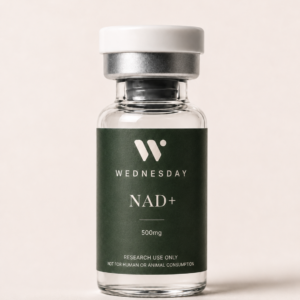 Cellular Energy & Neuro Research
NAD+
500 mg / 1000 mg View listing →
Cellular Energy & Neuro Research
NAD+
500 mg / 1000 mg View listing →
Frequently asked questions
What does NAD+ do in the body?
NAD+ has two roles. As a redox coenzyme it carries electrons from nutrient breakdown to the mitochondrial respiratory chain, enabling ATP production. As a signaling substrate it is consumed by sirtuins, PARPs and CD38, enzymes that regulate gene expression, DNA repair and calcium signaling.
Why does NAD+ decline with age?
Human and animal tissues show falling NAD+ across adult life. The best-supported explanation is increased consumption by CD38 and PARP enzymes, driven by inflammation and accumulated DNA damage, rather than a primary failure of synthesis. Mice lacking CD38 are protected from the decline.
What is the difference between NAD+ and NADH?
They are the oxidized and reduced forms of the same molecule. NAD+ accepts electrons to become NADH during glycolysis and the citric acid cycle; NADH gives them up at complex I of the electron transport chain and returns to NAD+. The ratio between them reflects the cell’s metabolic state.
Does NAD+ supplementation work in humans?
Oral precursors such as NR and NMN reliably raise blood NAD+ in trials lasting weeks to months. Functional outcomes are mixed: one trial found improved muscle insulin sensitivity in prediabetic women, while many others report no change in strength, cognition or cardiometabolic markers. Direct NAD+ has only pharmacokinetic data in humans.
Is NAD+ a peptide?
No. NAD+ is a dinucleotide built from adenine, nicotinamide, two ribose sugars and two phosphates. It contains no amino acids. It is sometimes grouped with peptides in research catalogs because it is supplied in the same lyophilized format, but chemically it belongs to a different class.
References & further reading
- Covarrubias AJ, Perrone R, Grozio A, Verdin E. NAD+ metabolism and its roles in cellular processes during ageing. Nat Rev Mol Cell Biol. 2021;22(2):119–141. doi:10.1038/s41580-020-00313-x / PMID 33353981
- Massudi H, Grant R, Braidy N, et al. Age-associated changes in oxidative stress and NAD+ metabolism in human tissue. PLoS One. 2012;7(7):e42357. doi:10.1371/journal.pone.0042357
- Camacho-Pereira J, Tarragó MG, Chini CCS, et al. CD38 dictates age-related NAD decline and mitochondrial dysfunction through an SIRT3-dependent mechanism. Cell Metab. 2016;23(6):1127–1139. doi:10.1016/j.cmet.2016.05.006 / PMID 27304511
- Liu L, Su X, Quinn WJ 3rd, et al. Quantitative analysis of NAD synthesis-breakdown fluxes. Cell Metab. 2018;27(5):1067–1080.e5. doi:10.1016/j.cmet.2018.03.018
- Yoshino J, Baur JA, Imai S. NAD+ intermediates: the biology and therapeutic potential of NMN and NR. Cell Metab. 2018;27(3):513–528. doi:10.1016/j.cmet.2017.11.002
- Mills KF, Yoshida S, Stein LR, et al. Long-term administration of nicotinamide mononucleotide mitigates age-associated physiological decline in mice. Cell Metab. 2016;24(6):795–806. doi:10.1016/j.cmet.2016.09.013
- Martens CR, Denman BA, Mazzo MR, et al. Chronic nicotinamide riboside supplementation is well-tolerated and elevates NAD+ in healthy middle-aged and older adults. Nat Commun. 2018;9:1286. doi:10.1038/s41467-018-03421-7
- Yoshino M, Yoshino J, Kayser BD, et al. Nicotinamide mononucleotide increases muscle insulin sensitivity in prediabetic women. Science. 2021;372(6547):1224–1229. doi:10.1126/science.abe9985 / PMID 33888596
- Grant R, Berg J, Mestayer R, et al. A pilot study investigating changes in the human plasma and urine NAD+ metabolome during a 6 hour intravenous infusion of NAD+. Front Aging Neurosci. 2019;11:257. doi:10.3389/fnagi.2019.00257
- Christen S, Redeuil K, Goulet L, et al. The differential impact of three different NAD+ boosters on circulatory NAD and microbial metabolism in humans. Nat Metab. 2026;8(1):62–73. doi:10.1038/s42255-025-01421-8