Key takeaways
- On April 30, 2026, FDA proposed permanently excluding semaglutide, tirzepatide and liraglutide from the 503B Bulks List, which would bar outsourcing facilities from compounding them in bulk even during future shortages; comments closed June 29 and, after an extension, ran into July.
- The proposal followed a February 6 announcement that FDA would restrict access to GLP-1 active ingredients for mass-marketed unapproved products and would use seizure and injunction against violators.
- In July, Stanford Medicine clinicians catalogued the specific safety concerns FDA has raised with compounded GLP-1s: tenfold to twentyfold dosing errors with multidose vials, unapproved salt forms, undocumented additives and untested sublingual formulations.
- In August, FDA extended the same intended-use reasoning to four online sellers of research-labeled GLP-1-class peptides, making 2026 the year the agency treated compounded and “research” incretins as one enforcement problem.
The compounded GLP-1 market grew out of a specific legal accident. When semaglutide and tirzepatide were on FDA’s drug shortage list in 2022 through 2024, section 503B of the Food, Drug, and Cosmetic Act allowed outsourcing facilities to compound them in bulk, and section 503A allowed pharmacies to compound copies for individual patients. Telehealth platforms built businesses on that window. When the shortages were declared resolved, tirzepatide in December 2024, semaglutide in February 2025, the legal basis for most of that compounding disappeared, but the market did not. 2026 has been the year FDA moved from declaring the window closed to nailing it shut, and the agency’s reasoning along the way bears directly on any supplier of incretin-class peptides, including those sold for research. This note lays out the sequence and what it implies.
February: the enforcement announcement
On February 6, 2026, FDA announced that it intended to take action against non-approved GLP-1 drugs being mass-marketed as alternatives to approved products, naming a large telehealth company that had announced a compounded semaglutide tablet the previous day. The agency said it would restrict access to GLP-1 active pharmaceutical ingredients intended for such products, would pursue misleading marketing claims, that compounded products are generic equivalents, contain the same active ingredient, or are clinically proven equivalent, and would use “all available compliance mechanisms, including potential seizure and injunction.” The Commissioner’s statement warned that “failure to adequately address any violations may result in legal action without further notice.”1 Within days, the manufacturer of semaglutide sued the named telehealth company for patent infringement.2
April: the proposed rule
On April 30, FDA proposed to exclude semaglutide, tirzepatide and liraglutide from the 503B Bulks List. The list identifies bulk drug substances that outsourcing facilities may use when there is a “clinical need” to compound from bulk rather than from the approved product. FDA’s position was that no such need exists for these three drugs when approved versions are available. If finalized, the rule would eliminate the bulks-list pathway permanently, so that even a future shortage would not reopen bulk compounding by 503B facilities.3,4
The rule has no direct effect on 503A pharmacies, which compound for individual patients under state licensure. But their legal basis had already narrowed: with shortages resolved, 503A pharmacies may not compound what is “essentially a copy” of an approved drug, leaving only narrow exceptions such as a documented excipient allergy or a strength not commercially available.3 The comment period ran to June 29, 2026 and was extended into July.5 As of early September no final rule has issued.
| Date | Action | Scope | Status |
|---|---|---|---|
| Feb 6, 2026 | FDA announcement of intent to act against non-approved GLP-1 drugs; API access restriction | Mass-marketed compounded products, telehealth | Enforcement ongoing |
| Feb 9, 2026 | Manufacturer patent suit against telehealth compounder | Private litigation | Pending |
| Apr 30, 2026 | Proposed rule: remove semaglutide, tirzepatide, liraglutide from 503B Bulks List | 503B outsourcing facilities | Comments closed; no final rule |
| Jun–Jul 2026 | Comment period extension | 503B proposed rule | Closed |
| Aug 24, 2026 | Warning letters to four online peptide sellers | Research-labeled GLP-1-class and other peptides | Responses due within 15 business days |
July: the clinical case against compounded GLP-1s
A July 16 explainer from Stanford Medicine summarized why clinicians and FDA are concerned, and it is the most concrete public account of the safety issues. Four stand out.5
Dosing errors. Approved GLP-1 products come in pre-filled pens. Compounded versions typically come in multidose vials that patients measure themselves. FDA has documented cases of patients drawing up ten to twenty times the intended amount, and in 2024 roughly 95 percent of reported adverse events with GLP-1s involved dosing or administration problems.
Unapproved salt forms. Some compounders have used semaglutide sodium or acetate rather than the base form in the approved drug. These are chemically distinct, have not been tested in humans, and FDA has said they are not eligible for compounding.
Undocumented additives. Vitamins B12 and B6 and other ingredients are often added to differentiate a product. A 2026 study cited in the piece found that tirzepatide and B12 can chemically bond into a molecule that has never been tested.
Untested formulations. Sublingual drops and dissolving tablets have no absorption data. A Stanford pharmacist is quoted: “Nobody legitimate makes sublingual semaglutide.”
Underlying all four is the fragility of the molecule. GLP-1 analogues are peptides; they degrade with heat, agitation and time, and without validated manufacturing and stability testing there is no assurance that what is in the vial at the point of use matches the label. This is the same concern that motivates third-party testing and controlled storage for research material.
A peptide does not know whether it was labeled a compounded drug or a research chemical; it degrades, and it is dosed, the same way.
August: the research-labeled sellers
The step that connects the compounding story to research suppliers came on August 24, when FDA issued warning letters to four online peptide vendors. The products cited were overwhelmingly incretin-class: semaglutide, tirzepatide, survodutide, mazdutide and a triple GLP-1/GIP/glucagon receptor agonist, alongside tesamorelin, SS-31, PT-141 and bacteriostatic water. Every product bore a research-use-only label. FDA held that the labels did not control intended use where the sellers’ websites made weight-loss and glucose-control claims and bundled bacteriostatic water with peptide guides and calculators.6,7 Wednesday’s detailed note on the August letters walks through the reasoning.
The significance is the continuity. The February announcement targeted compounders marketing to consumers. The April rule targeted the bulk API pipeline into outsourcing facilities. The August letters targeted sellers who avoid both frameworks by labeling the same peptides for research, and FDA applied the same test it applies to compounders: what is this product, objectively, intended for? In 2026 the agency is treating GLP-1-class peptides as a single enforcement category, and the label on the vial is the least important variable.
What this means for a research supplier
Three implications follow for any supplier of incretin-class research peptides, including Wednesday, which supplies R3TA, a research-grade triple GLP-1/GIP/glucagon receptor agonist.
First, the compliance question is a conduct question. The August letters cite no product-quality failures; they cite web copy, disease claims and administration kits. A supplier that describes the receptor pharmacology as reported in the literature, as in the GLP-1 biology note or the triple-agonist overview, while making no claim about what the product does for a buyer, is on the right side of the test FDA is applying. A supplier that publishes dosing calculators is not.
Second, the quality question is unchanged but sharpened. Every concern in the Stanford list, identity, salt form, degradation, additives, is answerable for research material only by batch-specific analytical testing. A certificate of analysis that reports HPLC purity, mass spectrometric identity and net peptide content is the research-side equivalent of the manufacturing controls FDA says compounded products lack. Wednesday’s certificates are in the COA library.
Third, the distinction between research-grade material and pharmaceutical product has to be stated, not assumed. The phase 3 data reported at ADA 2026 for the triple agonist, summarized in a separate note, describe a GMP-manufactured drug in supervised trials. They say nothing about a research reagent, and a supplier that lets readers infer otherwise is making the claim FDA’s letters describe.
Reading the evidence
None of the actions described here approves, restricts or reclassifies research-use peptides as a category. They concern unapproved drug products intended for human use. Research-grade GLP-1-class peptides remain unapproved substances for laboratory use only, and nothing in this note is guidance on human use of any compound.
What to watch
Three things will define the next phase. Whether and when FDA finalizes the 503B rule, and whether the final version adds substances. Whether the August warning letters are followed by seizures or injunctions, which would indicate the agency intends to enforce, not merely warn. And whether the intended-use reasoning in the August letters is extended beyond incretin peptides to the tissue-repair and GH-axis compounds that FDA’s advisory committee discussed in July. On the evidence of 2026 so far, the direction is consistent: the agency is reading what sellers say, not just what they print on the vial.
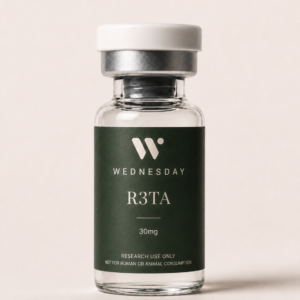 Metabolic Signaling Research
R3TA
Triple GLP-1/GIP/glucagon receptor agonist, research use only, third-party tested View listing →
Metabolic Signaling Research
R3TA
Triple GLP-1/GIP/glucagon receptor agonist, research use only, third-party tested View listing →
Frequently asked questions
Is compounded semaglutide banned in 2026?
Not by a final rule as of September 2026. FDA proposed on April 30, 2026 to remove semaglutide, tirzepatide and liraglutide from the 503B Bulks List, which would permanently bar bulk compounding by outsourcing facilities. Pharmacy compounding of copies under 503A was already largely foreclosed when the shortages ended in 2024–2025. FDA has separately announced enforcement against mass-marketed compounded GLP-1s.
What is the difference between 503A and 503B compounding?
503A covers state-licensed pharmacies compounding for an individual patient with a prescription. 503B covers registered outsourcing facilities that compound in bulk without patient-specific prescriptions under FDA oversight. The 2026 proposed rule concerns the 503B bulks list only.
Why is FDA concerned about compounded GLP-1 drugs?
Documented dosing errors with multidose vials, use of unapproved salt forms, undocumented additives that may react with the peptide, and untested formulations such as sublingual drops. Underlying all of these is the absence of validated manufacturing and stability controls for a fragile peptide molecule.
Do the 2026 GLP-1 actions affect research peptides?
Indirectly but clearly. In August 2026 FDA issued warning letters to four sellers of research-labeled GLP-1-class peptides, applying the same intended-use test used against compounders. Research-use labeling does not protect a seller whose marketing indicates human use.
Is research-grade R3TA a compounded drug?
No. It is a research chemical supplied for laboratory use only. It is not a compounded drug, not an approved drug, and not the pharmaceutical product tested in clinical trials. It is not intended for human use.
References & further reading
- U.S. Food and Drug Administration. FDA Intends to Take Action Against Non-FDA-Approved GLP-1 Drugs. Press announcement, February 6, 2026. fda.gov
- Pharmacy Times. FDA and Novo Nordisk Warned of GLP-1 Telehealth Compounding Takedown. What’s Next? February 2026. pharmacytimes.com
- Pharmacy Times. FDA Moves to Permanently Close the Door on Compounded GLP-1s. April 30, 2026. pharmacytimes.com
- Orrick LLP. FDA Moves to Shut the Door on Large-Scale Compounding of GLP-1 Drugs. May 2026. orrick.com
- Stanford Medicine. Compounded GLP-1s: Why doctors worry and the FDA is cracking down. July 16, 2026. med.stanford.edu
- U.S. Food and Drug Administration, CDER. Warning Letter: NuScience Peptides LLC (733652). August 24, 2026. fda.gov
- U.S. Food and Drug Administration, CDER. Warning Letter: Royal Peptides LLC (734884). August 24, 2026. fda.gov
- U.S. Food and Drug Administration. FDA clarifies policies for compounders as national GLP-1 supply begins to stabilize. fda.gov
- U.S. Food and Drug Administration. Bulk Drug Substances Used in Compounding Under Section 503B of the FD&C Act. fda.gov