Key takeaways
- A phase II pilot published in Alzheimer’s & Dementia in July 2026 found that twelve weeks of nicotinamide riboside doubled blood NAD+ in older adults with amnestic mild cognitive impairment but did not improve cognition, total cerebral blood flow or blood pressure.
- A phase 0/1b trial published in GeroScience on July 30, 2026 found that an orally delivered NAD+ formulation raised intracellular NAD in whole blood by 53 percent over placebo within six days, while plasma NAD did not change.
- Both trials confirm that NAD+ repletion is pharmacologically achievable in humans and that the compartment measured, plasma, whole blood, tissue, determines what one sees.
- Neither trial demonstrates a clinical outcome, which after a decade of NAD+ precursor research remains the field’s central unmet result.
Nicotinamide adenine dinucleotide sits at the center of cellular energy metabolism and of the sirtuin and PARP enzyme families that consume it, and its decline with age has been documented across tissues in animals and, less completely, in humans. Restoring it has been a research goal for more than a decade, pursued mainly through oral precursors, nicotinamide riboside (NR) and nicotinamide mononucleotide (NMN), and more recently through attempts to deliver the dinucleotide itself. July 2026 produced two randomized, placebo-controlled human trials that, read together, define where the field stands. One asked whether raising NAD+ changes something clinically meaningful in a population that might benefit. The other asked whether NAD+ itself, rather than a precursor, can be delivered orally in a form that reaches cells. The answers were, respectively, not in twelve weeks, and apparently yes. This note explains both and what they mean for readers of Wednesday’s NAD+ research overview.
Trial one: nicotinamide riboside in amnestic mild cognitive impairment
Martens and colleagues at the University of Delaware, publishing in the July 2026 issue of Alzheimer’s & Dementia, ran a twelve-week, double-blind, placebo-controlled phase II pilot of oral NR in older adults with amnestic mild cognitive impairment, the memory-predominant prodrome that often precedes Alzheimer’s disease. Forty-two participants completed the study, 22 on NR and 20 on placebo. The rationale was that NAD+ depletion contributes to cerebrovascular dysfunction and that NR, which had previously been shown to raise NAD+ in healthy older adults, might improve cerebral blood flow and, through it, cognition.1
The biomarker result was unambiguous: blood NAD+ roughly doubled in the NR group. Adherence was good and no serious adverse events were attributed to the intervention. The clinical result was equally unambiguous in the other direction. NR did “not improve cognitive function, total cerebral blood flow, or blood pressure over 12 weeks.” An exploratory analysis suggested regional cerebral blood flow may have increased in the hippocampus, which the authors flag as a lead for longer studies rather than a finding.1
This is the pattern the NAD+ precursor literature has produced repeatedly since the first human NR pharmacokinetic studies in 2016: the precursor does what it is supposed to do biochemically, and the downstream outcome does not move within the trial’s window. Twelve weeks is short for a neurodegenerative endpoint, and 42 participants is a pilot, so the study cannot exclude an effect. But it adds to a record in which the biochemical step is reliably demonstrated and the clinical step is not.
Trial two: oral NAD+ itself
The second trial addresses a different problem. NAD+ is generally believed not to survive oral administration intact; it is degraded in the gut to nicotinamide and other metabolites and resynthesized inside cells, which is why the field has relied on precursors. Kornilov and colleagues, publishing in GeroScience on July 30, 2026, tested a physicochemically modified oral NAD+ formulation they call LNAD+ in the RENEWAL-NAD+ trial, a double-blind, randomized, placebo-controlled phase 0/1b study in 50 healthy adults aged 45 to 75, run over five days of administration.2
Their primary readout was intracellular NAD in whole blood, that is, NAD+ inside blood cells rather than in plasma. At day six it was 53 percent higher than placebo. Plasma NAD, by contrast, did not change. Plasma NAD catabolites, the breakdown products that appear when NAD+ is consumed by sirtuins, PARPs and CD38, rose substantially, which the authors interpret as evidence that the newly available NAD+ was being used, not merely stored. The formulation was well tolerated, with minimal adverse effects and no significant change in secondary clinical or safety endpoints over the short study.2
The study does not resolve how the molecule gets into cells, whether intact, via extracellular degradation and rapid resynthesis, or through a transporter, and a five-day, 50-person phase 0/1b trial is a feasibility study rather than an efficacy study. What it establishes is that the intracellular NAD pool can be moved quickly with an oral NAD+ product, and that plasma NAD is the wrong place to look for it.
| Martens et al. Alzheimer’s & Dementia | Kornilov et al. GeroScience | |
|---|---|---|
| Published | July 2026 (vol. 22, issue 7) | July 30, 2026 |
| Compound | Nicotinamide riboside (precursor) | Modified oral NAD+ (LNAD+) |
| Design | Phase II pilot, double-blind, placebo-controlled | Phase 0/1b, double-blind, placebo-controlled |
| Population | Older adults with amnestic MCI; 42 completers | Healthy adults 45–75; n=50 |
| Duration | 12 weeks | 5 days of administration, day-6 readout |
| NAD+ biomarker | Blood NAD+ approximately doubled | Intracellular whole-blood NAD +53% vs placebo; plasma NAD unchanged |
| Clinical outcome | No change in cognition, total CBF or blood pressure | Not assessed (feasibility and safety) |
| Safety | No serious adverse events attributed | Well tolerated; minimal adverse effects |
Every NAD+ trial so far has succeeded at the step it can measure in a week and stalled at the step that takes years.
The compartment problem
The most technically useful lesson from the July pair concerns measurement. NAD+ exists in several compartments, plasma, red and white blood cells, and the tissues that actually matter for aging biology, and they do not move together. The GeroScience trial saw a large intracellular rise with no plasma change; earlier precursor studies have reported the reverse or measured only one. A research program that reports “NAD+ levels” without specifying the compartment is reporting something close to nothing. This applies to laboratory work with research-grade NAD+ as much as to clinical trials: the assay, the matrix and the timing determine the number. Wednesday’s comparison of NMN, NR and the direct molecule discusses why the route into the cell differs for each.
Where this leaves the NAD+ hypothesis
The hypothesis that restoring NAD+ slows aspects of aging rests on strong animal data and on the biochemistry of sirtuins and DNA repair. The human record, now including these two trials, shows three things clearly. Repletion is achievable by several routes. Short-term safety in small trials has been acceptable. And no adequately powered trial has yet shown a clinical benefit, in cognition, vascular function, muscle or metabolic disease, that persuades skeptics. The Delaware group’s honest framing, that longer durations warrant investigation, is the field’s consensus position and has been for several years.
For researchers, the implication is that the interesting questions have moved downstream. Which tissues take up NAD+ from which precursor, at what rate, and with what effect on sirtuin and PARP activity, are tractable questions in cell and animal systems. Whether any of that changes a human outcome is a question for trials larger and longer than either of July’s.
Reading the evidence
Neither trial studied a research-grade product. The NR used in the Delaware study and the LNAD+ formulation in the GeroScience study were trial-specific materials administered under protocol. Wednesday’s NAD+ is supplied for laboratory research only; it is not a dietary supplement, not an approved drug, and no result described here applies to it. Nothing in this note is guidance on human use.
Context: the wider 2026 NAD+ literature
The two July trials sit alongside a small but growing set of controlled human studies of NAD+ precursors, including a 2025 randomized trial of NR in long COVID in eClinicalMedicine and a 2025 pilot in peripheral artery disease.3,4 The through-line is consistent: NAD+ or its metabolites rise, tolerability is good, and clinical endpoints are either unchanged or changed in exploratory analyses that require confirmation. It is a mature enough record that a new trial reporting a robust clinical effect would be genuinely newsworthy, and neither July paper claims one. That restraint is itself a signal of a field that has learned to separate biomarker success from outcome success, which is the standard Wednesday applies when describing what the research record shows for any compound in the catalog.
 Cellular Energy & Neuro Research
NAD+
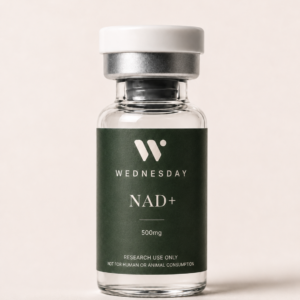
Nicotinamide adenine dinucleotide, research use only, third-party tested View listing →
Cellular Energy & Neuro Research
NAD+
Nicotinamide adenine dinucleotide, research use only, third-party tested View listing →
Frequently asked questions
Does nicotinamide riboside improve memory?
Not in the one randomized trial designed to test it in people with mild cognitive impairment. The July 2026 phase II pilot found NR doubled blood NAD+ over twelve weeks but did not improve cognitive function, total cerebral blood flow or blood pressure. The study was small and short, and the authors call for longer trials.
Can NAD+ be taken orally, or only precursors?
Conventional NAD+ is thought to be degraded in the gut. The July 2026 GeroScience trial tested a modified oral NAD+ formulation and found it raised intracellular whole-blood NAD by 53 percent over placebo in six days, while plasma NAD was unchanged. How it enters cells was not determined, and the trial measured feasibility and safety, not clinical outcomes.
What does the 2026 research say about NAD+ and aging?
That NAD+ can be raised in humans by several routes with acceptable short-term tolerability, and that no adequately powered trial has yet shown a clinical benefit on an aging-related outcome. The July 2026 trials confirm both halves of that statement.
Why did plasma NAD not change in the oral NAD+ trial?
Because NAD+ is largely an intracellular molecule. The trial measured whole-blood intracellular NAD, which rose, and plasma NAD, which did not. The rise in plasma breakdown products suggested the new NAD+ was being consumed by cellular enzymes. Which compartment is measured determines the result.
Is research-grade NAD+ the same as the products in these trials?
No. The trials used protocol-specific NR and a proprietary modified NAD+ formulation. Research-grade NAD+ is a laboratory reagent supplied for research use only and is not intended for human use.
References & further reading
- Martens CR, Decker KP, DeConne TM, Sanjana F, Horvat F, Rizzi NA, Awad C, Habash E, Hobson JC, Kramer MK, Armstrong ML, Reisdorph N, Pohlig RT, Lanzi AM, Johnson CL, Cohen ML, Ellison JM. A phase-II randomized controlled pilot study of nicotinamide riboside supplementation in older adults with amnestic mild cognitive impairment. Alzheimers Dement. 2026;22(7). doi:10.1002/alz.71605
- Kornilov SA, Hastings WJ, McGrath LF, Leitz-Langan M, Magis AT, Coppess SM, Komac W. Oral LNAD+ rapidly elevates whole blood intracellular NAD and metabolic flux without elevating plasma NAD: evidence from a randomized controlled trial. GeroScience. 2026. doi:10.1007/s11357-026-02399-1
- Effects of nicotinamide riboside on NAD+ levels, cognition, and symptom recovery in long-COVID: a randomized controlled trial. eClinicalMedicine. 2025. thelancet.com
- Effects of NAD+ supplementation with oral nicotinamide riboside on vascular health and cognitive function in older adults with peripheral artery disease: results from a pilot 4-week open-label clinical trial. 2025. sciencedirect.com
- Trammell SA, Schmidt MS, Weidemann BJ, et al. Nicotinamide riboside is uniquely and orally bioavailable in mice and humans. Nat Commun. 2016;7:12948. doi:10.1038/ncomms12948
- Martens CR, Denman BA, Mazzo MR, et al. Chronic nicotinamide riboside supplementation is well-tolerated and elevates NAD+ in healthy middle-aged and older adults. Nat Commun. 2018;9:1286. doi:10.1038/s41467-018-03421-7